
Jump to: age guides · party ideas · sample programme · common questions
How old will the birthday child be?
Age is a useful starting point. Think about what your child enjoys, the size of the group and how much quiet time the children need.
Three ways to fill the dance floor
Your space and your group shape the plan. Choose a starting point and explore the matching guide.

TURN THE LIVING ROOM INTO A DANCE FLOOR
At home: small space, plenty of fun
Move loose items out of the way and choose one spot for drinks and cake. A few favourite songs, musical statues and a quieter game can go a long way.
- Consider the clear floor space, not just the guest count.
- Alternate dancing with a drinks break.
- Leave a corner for children who want to watch.
Start here: sketch the room and mark the dance floor, table and walkway.

WORKING WITH THE PARENT COMMITTEE
At school: a good plan behind the party
A school disco starts with clear arrangements. Who welcomes the children, who supervises the hall and how will collection work? Decide whether age groups dance together or have their own sessions.
- Choose one contact for the DJ and the school.
- Assign helpers to the entrance, hall and exit.
- Leave time between groups for a calm changeover.
Start here: make a task list with a name beside every job.

NEON, MUSIC AND A THEME OF YOUR OWN
Glow: choose colour, keep things simple
A glow party starts with a few clear choices: fluorescent details, an open dance floor and songs the children know. The room doesn’t have to be completely dark to feel festive.
- Test how decorations look under your chosen lights.
- Keep walkways and the drinks area visible.
- Ask the group which songs they really want to hear.
Start here: choose two or three colours for the invitations and decorations.
Small details that make a big difference
An invitation with clear arrangements, a rainy-day plan or an idea chosen by the birthday child: these guides help you along.
Let the birthday child help choose
A party for bigger kids
Pick an activity that suits the group together. No compulsory theme or game that nobody wants to play.
Clear details for parents
The invitation
What should the invitation say? Find sample wording and reminders about times, the address, clothing and practical arrangements.
Have an indoor plan ready
Rain on the day
Decide in advance which activities will also work indoors, so you won’t need to rethink everything on the day.
What a party afternoon could look like
A two-hour example for a birthday party at home. Adjust the blocks to your group. This is not a package or a fixed DiscoShow duration.
From hello to the last dance
- 00:00–00:15 · Welcome: coats away, time to settle in and a drink.
- 00:15–00:35 · Start together: a familiar game or a first round of dancing.
- 00:35–00:50 · Break: cake or a small snack, with time to sit down.
- 00:50–01:20 · Party time: music, a dance game or your chosen activity.
- 01:20–01:35 · Recharge: drinks and a quieter moment.
- 01:35–01:50 · The favourites: another game or the birthday child’s favourite songs.
- 01:50–02:00 · Finish together: last song, belongings and collection.
Let the plan adapt
Younger children? Choose fewer activities and shorter active blocks. Repeating a familiar game can be nicer than constantly trying something new.
Older children? Let them help choose music and activities. Agree beforehand how much room there is for their own ideas.
Booked a DJ? Fit the plan around the agreed playing time, setup and breaks. Don’t automatically put cake or food in the middle of the show.
A game isn’t working? Bring it to a calm close and move on. The plan is there to help you, not to set tasks for the children.
What should you arrange, and when?
This order keeps preparation manageable. Start earlier for a popular date or a hired venue.
When you choose the date
Agree on the guest list and budget. Check the venue and any DJ availability before sending invitations. Note what you will provide and what the supplier brings.
During the week before
Collect replies and any information about the children’s needs. Check times, address, helpers and song requests. Decide what to do if outdoor activities aren’t possible.
On the day
Clear walkways, prepare drinks and go through the plan with helpers. Keep parents’ phone numbers handy and agree who will oversee collection.
Planning a party for after-school care or a final-year primary school celebration? Explore our after-school discos or school leavers’ parties.
A few things to know before you plan
How many children should I invite?
Start with your space and what the birthday child feels comfortable with. A smaller group often allows more calm and attention. Consider who will help and which activity you choose. A package’s maximum group size does not automatically mean that many children will fit comfortably in your living room.
How long should the party last?
There is no single ideal length for every group. Include arrival, food, breaks and collection. Keep things shorter and simpler for younger children. A booked show has an agreed playing time; the whole party may last longer.
What if some children don’t want to dance?
Let them watch first or choose a small role, such as suggesting a song. Provide a quiet spot and invite them again later. Taking part does not have to look the same for everyone.
Can different ages celebrate together?
Yes, but choose activities children can join in with in their own way. At school, separate sessions for younger and older pupils may work well. Discuss numbers and ages with helpers and the DJ beforehand.
What do I arrange myself when booking a DiscoShow?
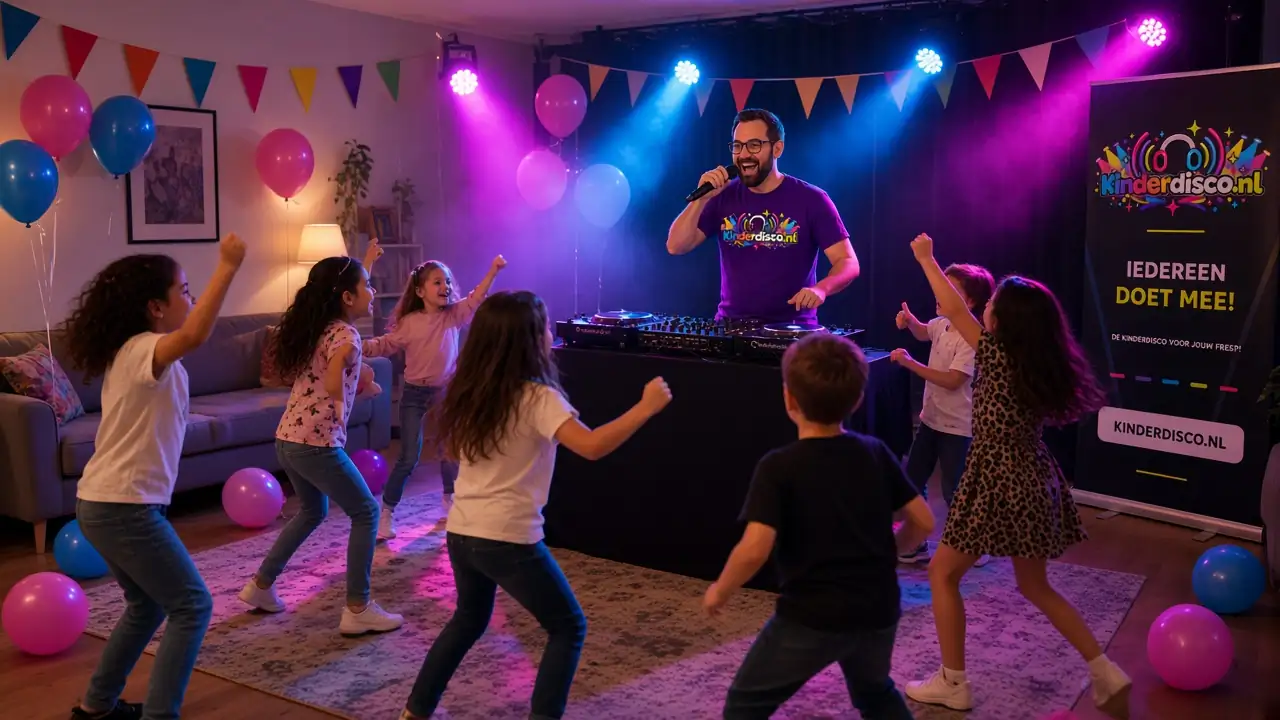
Kinderdisco.nl provides a show with a children’s DJ, music, lights and sound. Check your chosen package and the venue arrangements. Agree who handles arrival, supervision, food, drinks and collection. You book a DJ from the team, not a guaranteed individual.
No questions found.
Ready to turn plans into dancing?
Would you like us to take care of music, games, lights and sound? Explore our DiscoShows and packages or tell us your date and location. Kinderdisco.nl will help you find a show that suits your group.