Look beyond the average age
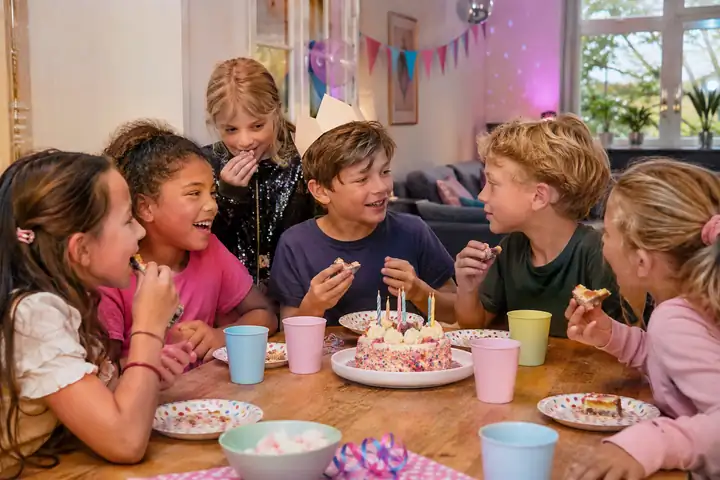
List the ages and numbers in each age group. One younger guest differs from two equally sized groups. Ask about interests too: age alone does not tell you who likes dancing, drawing or watching first. Keep the birthday child’s wishes central while finding ways for others to join.
One base activity, different options
For music, everyone can move in their own space. Younger children might copy a movement while older ones invent a short sequence. For a craft, everyone could make a party card, adding simple shapes or a more detailed design.
Offer the extra challenge as a choice. Older children may choose the easy version and younger ones may try something new. Avoid comparing results or labelling children during the activity.
Demonstrate one step at a time
Show the first instruction and begin. Add another only when the group understands. Activities everyone can do together, or in small groups, avoid long waits. Provide a quiet seat for anyone taking a break.
Older children are guests
Helping voluntarily can be fun, but do not assign older guests an automatic babysitting role. Adults remain responsible for instructions, refreshments and practical help. Agree who leads and who handles the door, toilets or an earlier collection.
Choose music across the group
Ask for favourite songs from different ages and check complete versions beforehand. Mix familiar singalongs with music for free movement. Avoid dividing taste into “baby music” and “older children’s music”.
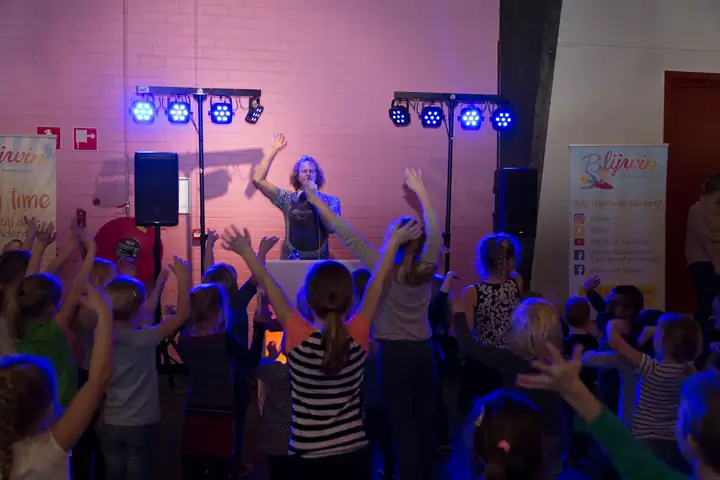
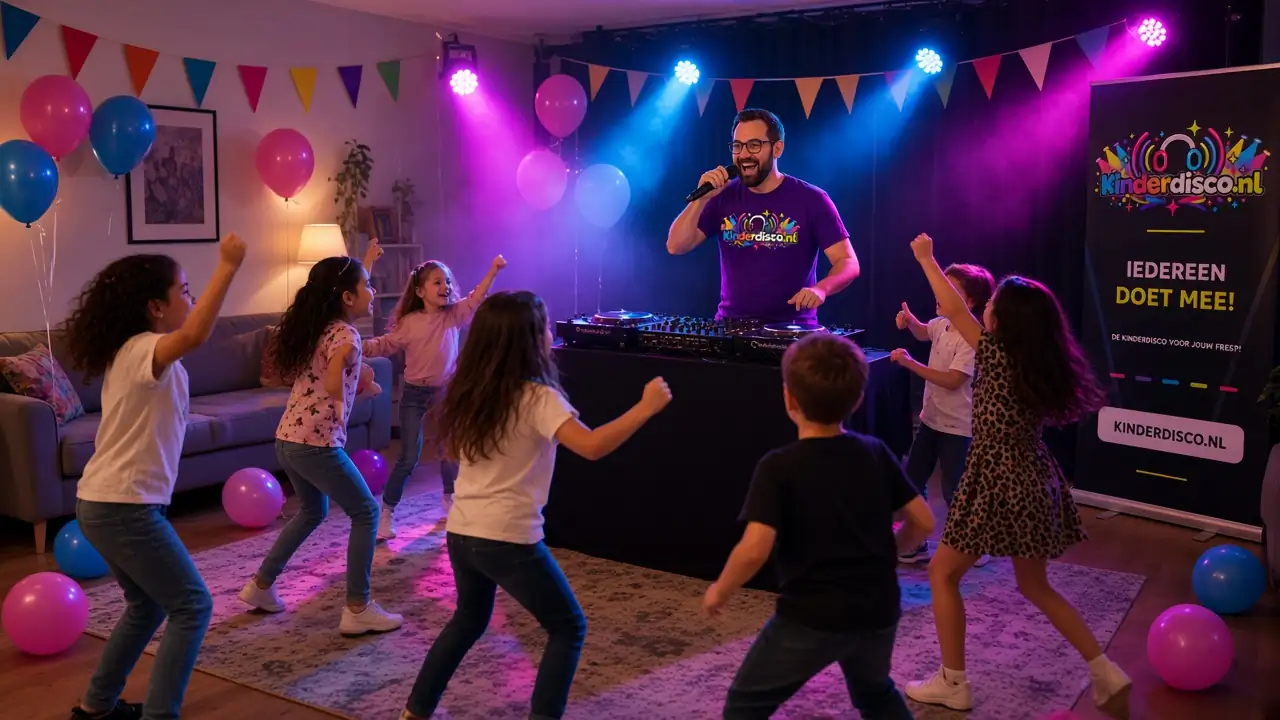
For a DiscoShow, give the actual age distribution, not only the birthday child’s age. Discuss the combination with Kinderdisco.nl; the show is mainly intended for children aged four and over.
Keep the timetable flexible
Plan arrival, a main activity, a break and an ending, leaving room to shorten a round. The guides for age six, eight and ten offer inspiration. Use them selectively rather than running three programmes at once.