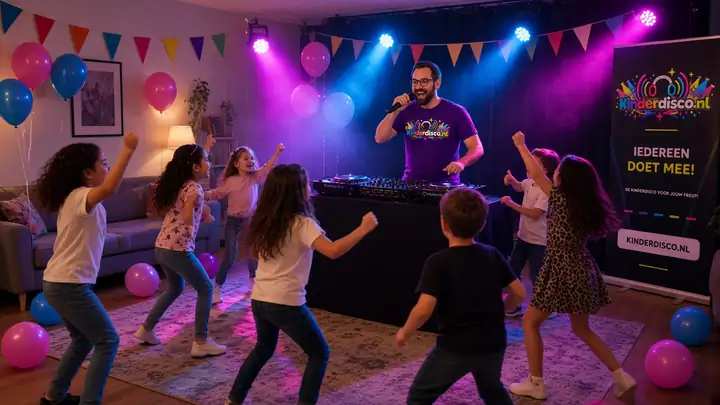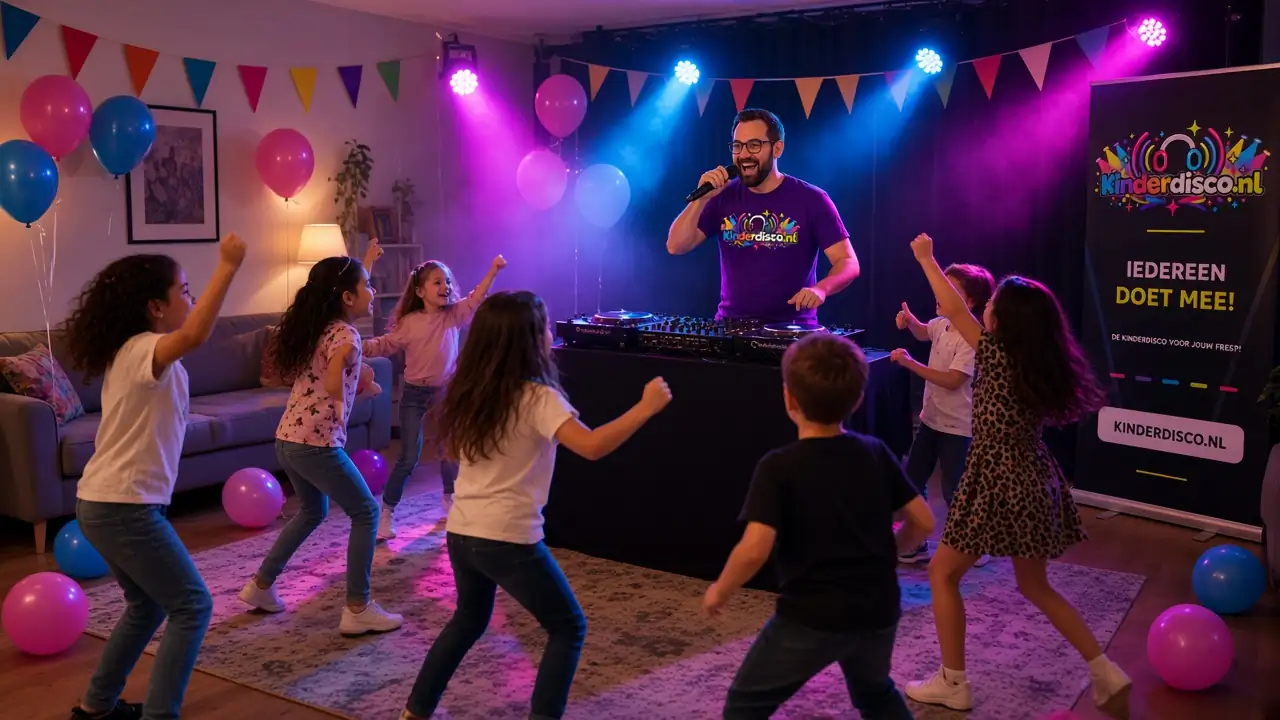
Which dance game suits your group?
For ages 4–6, start with short instructions and show the movement yourself. Children aged 7–9 can combine movements. Ages 10–12 may enjoy making up a routine or leading the group. The ages and timings below are suggestions, not fixed rules.
All you need is music, a pause button and a clear space. Keep drinks to one side, leave walkways clear and give everyone room to move their arms. An adult leads the activity. Choose music suitable for the group and turn it down when explaining a game.
1. Freeze dance with everyone staying in
Ages: around 4–8. Time: 4–5 minutes. You need: music you can pause.
Everyone dances. When the music stops, freeze like a statue. Give the next round a theme: make yourself small, look surprised or pose like a robot. Anyone who moves simply joins the next round. A child who prefers watching can choose the next pose.
Small space: dance on individual spots, without running or big jumps.
2. Mirror dancing in pairs
Ages: around 5–9. Time: 4 minutes. You need: gentle music with a clear beat.
Two children face each other. One slowly moves their hands, shoulders and feet; the other mirrors them. Swap after about half a minute. Demonstrate something simple first, such as two claps and a shoulder shrug. The aim is moving together, not tricking your partner.
Small space: use only arms and shoulders. You can also play sitting down.
3. Follow the dance leader
Ages: around 6–10. Time: 4–6 minutes. You need: a familiar upbeat song.
The group copies the leader: clapping, stepping on the spot or waving. After a short turn, the adult invites another volunteer to lead. Agree to keep moves simple, without acrobatic tricks. Anyone who does not want to lead can carry on dancing with the group.
Small space: use loose rows so everyone can see the leader. Stay on your own spot.
4. Robot, giant or mouse
Ages: around 4–7. Time: 3–4 minutes. You need: music and three agreed words.
Show a robot with angular arms, a giant stretching tall and a mouse making tiny movements. Call out one word as the children dance. They change their movements without racing around the room. Invite them to suggest another character they can act out gently.
Small space: use your upper body only. Hands can make big and small movements too.
5. Clap the rhythm back
Ages: around 6–12. Time: 3–5 minutes. You need: your hands; pause the music if you like.
Clap a short rhythm, such as two quick claps and one slow clap. The group repeats it. Only extend the pattern once everyone knows the first one. Then a volunteer can lead. Alternate clapping with gentle taps on your knees.
Small space: sit in a circle or on individual seats. This is a quieter activity between dance games.
6. Create a mini routine together
Ages: around 8–12. Time: 6–8 minutes. You need: a song the children know.
Small groups choose three simple moves. They practise a short sequence and repeat it to the music. Each group can demonstrate if they want to, while everyone else joins in. There are no judges or winners: each group contributes to the final dance.
Small space: groups take turns and use moves on the spot. Children who prefer not to perform can suggest a move or clap the beat.
Turn it into a short programme
Start with a familiar song and freeze dance. Choose one more game for the group’s age, take a drinks break and finish with free dancing or the mini routine. You do not need to play all six games in a row. Change activities when the children are ready.
For younger children, try freeze dance followed by robot, giant or mouse. Older children may enjoy leading a dance and creating a routine. For a whole-party plan, read our guides for a 6th birthday party or 8th birthday party.
Lead the games yourself or book a DiscoShow?
These are ideas to organise yourself, not a fixed list of activities included in every show. At Kinderdisco.nl, the DJ adapts music and games to the children’s ages and the occasion. Tell us about favourite games beforehand so we can discuss what fits.
See how the DiscoShow works and our disco packages. For school groups, visit school party bookings. You arrange supervision; the DJ delivers the agreed show.