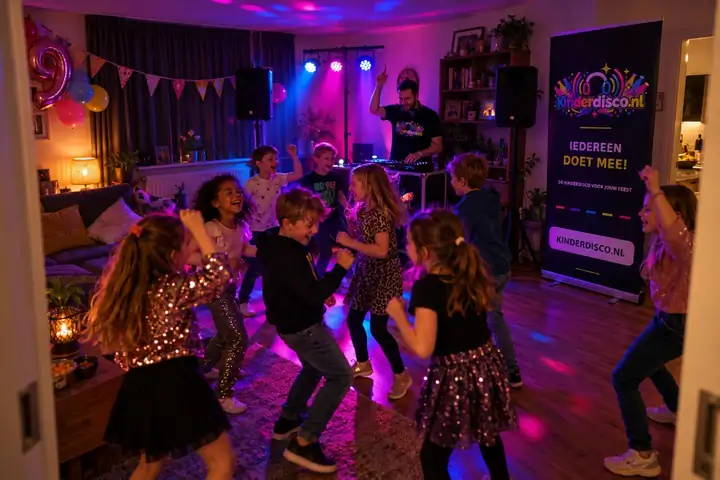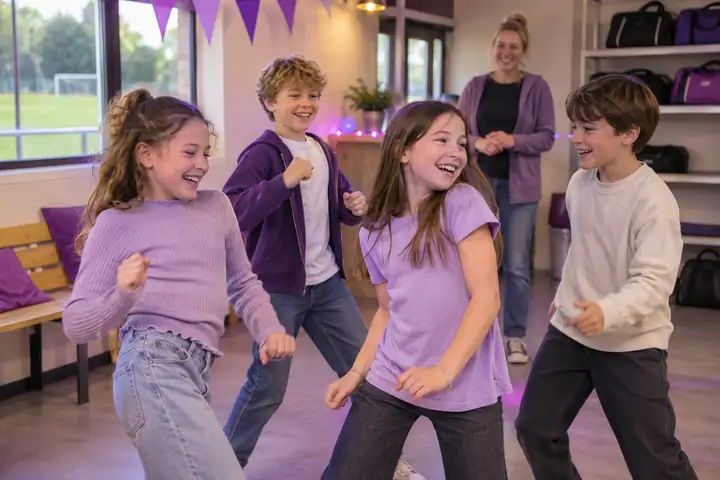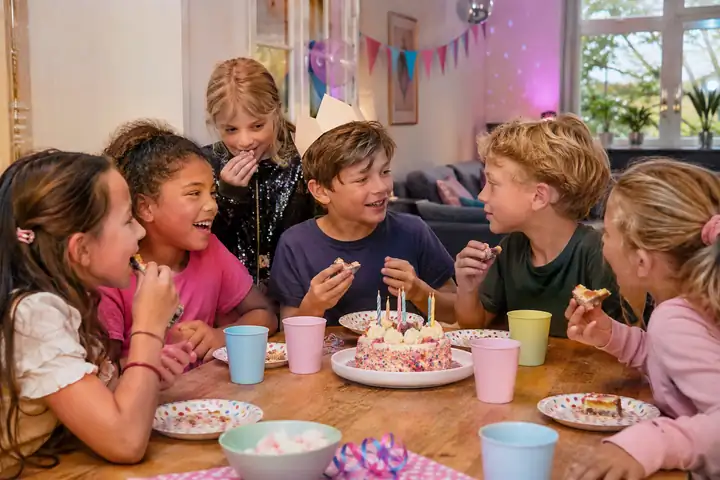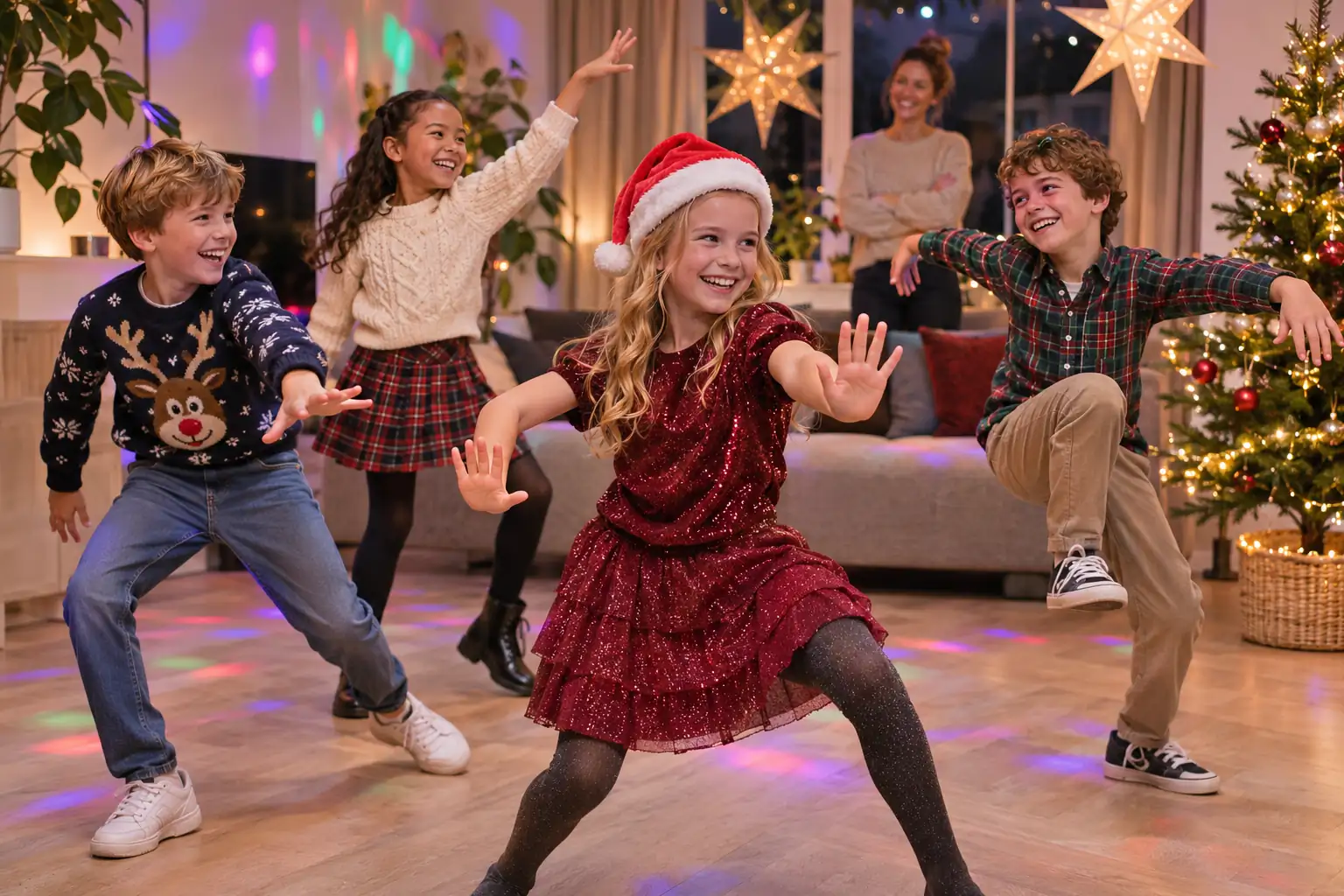
A Christmas birthday party at home can be simple: a familiar song, a game and something nice to eat. Choose the duration and group size around ages, space and the birthday child. Two hours is an example, not a rule.
Three Christmas activities
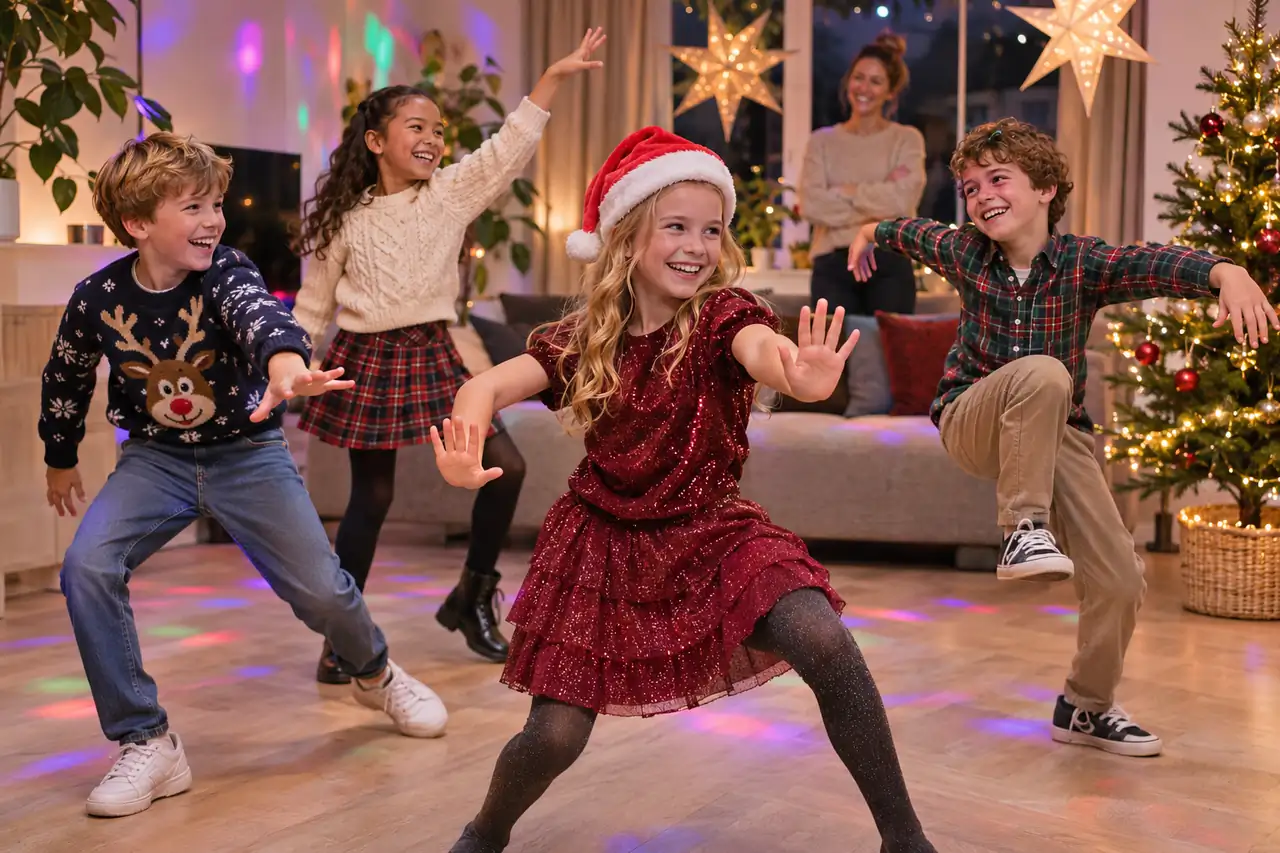
Christmas freeze dance: pause as a tree, snowman or reindeer. Demonstrate one pose for younger children; older children invent their own. Nobody is eliminated.
Find the Christmas pictures: hide paper stars or festive drawings in reachable places. Younger children search with an adult; older children collect colours in pairs. Use paper, not fragile ornaments.
Make a Christmas card: provide paper and pencils for a quiet moment between active rounds. Watching or having a drink instead is fine.
What to prepare for each activity
- Christmas freeze dance: a playlist, a speaker and a clear dance space. One adult starts and pauses the music.
- Christmas picture hunt: paper stars in two or three colours and a basket for each team. Count the pictures before hiding them so you know when all have been found.
- Christmas cards: sturdy paper, coloured pencils and stickers. Fold cards beforehand for younger children. Put the craft table away from the dance space.
Adapt the party to their ages
Ages 4–6: give one instruction at a time and demonstrate first. Alternate short dance rounds with searching, drawing and drinks. An adult helps with the hunt.
Ages 7–9: let children take turns choosing a freeze-dance pose. Make the hunt a shared task: can everyone find all the colours together?
Ages 10–12: ask the birthday child to choose a few songs beforehand. Ask whether the group wants games or free dancing. Card-making can be a quiet option, not a requirement.
Shopping and preparation checklist
- Paper, coloured pencils and optional stickers for cards and hidden pictures.
- Drinks, cups and a simple snack. Ask parents about allergies and dietary needs beforehand.
- Baskets or containers for collecting pictures.
- Reusable decorations kept clear of walking and dancing areas.
- A playlist you have listened to and a charged phone or music player.
Check what you already have at home. You do not need a prize for each round: searching and dancing together are the fun. Put the finishing time clearly on the invitation.
A two-hour example
- 15 minutes: arrivals and drinks.
- 20 minutes: picture hunt or cards.
- 15 minutes: food and conversation.
- 40 minutes: free dancing, freeze dance and short drinks breaks. This block needs more than four songs.
- 20 minutes: a quiet finish and perhaps a card to take home.
- 10 minutes: coats and collection.
Adapt it to your group. Shorten the dance block for younger children and ask older children about music beforehand. This is a DIY party schedule, not the fixed content or duration of a booked DJ show.
Prepare the room
Keep the dance space clear of the tree, cables and fragile decorations. Do not use lit candles while dancing. Arrange adult supervision, drinks and a quiet seat. Choose numbers around usable space; move to a larger venue if dancing blocks walking routes.
If you prefer a DJ, explore the DiscoShow, discuss performance time and check your date through the enquiry form.
Plan a children’s disco at home · Explore the DiscoShow · Check your date